Water-Wise Landscaping: Beautiful Yards with Less Thirst
Create a beautiful, low-maintenance yard that sips, not gulps, water—using smart plants, healthy soils, and efficient drip irrigation.
Start with a Smart, Water-Wise Plan
A beautiful, efficient yard begins on paper. Walk your property and note sun exposure, wind patterns, slope, and runoff paths. Sketch a simple map to group spaces by function and practice hydrozoning—placing high-, moderate-, and low-water plants in dedicated zones so every drop is used wisely. Identify microclimates near walls, patios, or driveways where reflected heat or shelter changes plant needs. Consider views from windows, high-traffic routes, and where a small lawn alternative might make sense for play or pets. Prioritize areas you see and use daily, then assign lower water budgets to peripheral zones. Plan gentle grading, swales, or shallow basins to slow and capture rainfall. Position shade trees to cool west- and south-facing areas and reduce evaporation. Above all, match plant selection to site realities—soil depth, drainage, and light—so you are not fighting nature with constant irrigation. A thoughtful plan sets the stage for lasting resilience and everyday savings.
Build Living Soil that Stores Moisture
Great water savings happen underground. Healthy soil acts like a sponge, balancing infiltration, drainage, and storage. Test texture with a simple squeeze: sticky means more clay; crumbly indicates loam; gritty points to sand. Improve structure by top-dressing with compost rather than deep tilling, which can break soil aggregates. A two- to three-inch layer of mulch—wood chips, shredded bark, or gravel in arid styles—reduces evaporation, moderates temperature, and suppresses weeds. Encourage mycorrhizae and microbial life by limiting synthetic quick fixes and feeding soil with slow, organic inputs. Where clay dominates, create wide planting holes and avoid overwatering so roots can access oxygen. In sandy soils, add organic matter and use drip irrigation to deliver small, steady sips. Consider berms and basins to hold stormwater on site, and place deeper-rooted plants where moisture lingers. By elevating soil health, you shorten run times, extend intervals between watering, and build true drought resilience.
Choose Climate-Smart Plants with Lasting Beauty
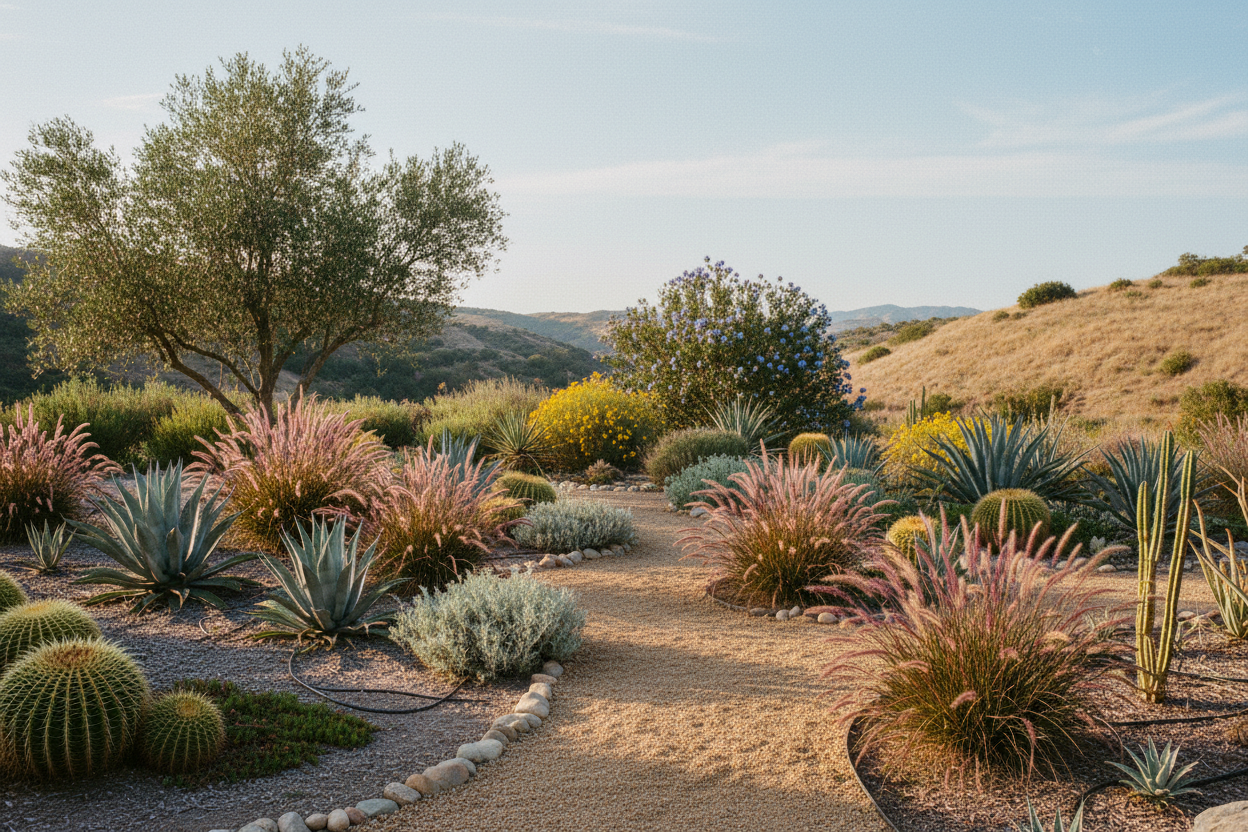
Water-wise landscapes are never boring when you design for texture, form, and seasonal interest. Prioritize native plants and regionally adapted species that thrive on natural rainfall once established. Mix drought-tolerant shrubs, ornamental grasses, succulents, and resilient groundcovers to create layers that shade soil and reduce evaporation. Use deciduous shade trees to cool patios in hot months and let in winter light, while evergreen structure keeps bones in the garden year-round. Aim for continuous bloom with staggered flowers that support pollinators and beneficial insects. Group plants by similar water needs and mature size to avoid constant pruning or extra irrigation. Remember the establishment period: even tough plants need consistent moisture while rooting in, then far less. Choose color palettes that complement your home—silvery foliage, deep greens, and muted blooms feel cool and elegant in dry gardens. With the right plant palette, you'll gain beauty, habitat, and lasting water efficiency.
Irrigate with Precision, Not Habit
Trading guesswork for precision slashes waste. Install drip irrigation or soaker hoses to deliver water directly to the root zone, minimizing evaporation and overspray. Use pressure regulators, filters, and matched emitters so each zone performs consistently. Schedule deep, infrequent watering to encourage strong roots, and employ cycle-and-soak on slopes to prevent runoff. Smart controllers, paired with rain or soil-moisture sensors, automatically adjust schedules when conditions change. Label and map hydrozones so thirsty edibles don't share a line with tough natives. Inspect lines seasonally; flush debris, repair leaks, and clear clogged emitters. Keep a generous mulch ring around plants so water penetrates instead of bouncing off baked soil. Hand-water new additions with a slow trickle to train deep rooting. Track run times and plant response, then refine settings. By delivering the right amount, to the right place, at the right time, you turn irrigation into targeted hydration instead of routine waste.
Hardscapes that Help, Not Hinder
Your non-plant elements can either fight or support water goals. Choose permeable paving—porous pavers, spaced steppers, or gravel paths—so rainfall soaks in instead of rushing away. Direct downspouts to rain gardens, swales, or decorative dry creek beds lined with rock to slow, spread, and sink water. Opt for lighter-colored surfaces that reflect heat, keeping nearby plants cooler and reducing evaporation. Replace large, thirsty turf with lawn alternatives: resilient groundcovers, meadow-style blends, or a compact seating area framed by low-water plantings. Use trellises, arbors, and shade structures to protect patios and create microclimates where plants need less irrigation. In narrow side yards, combine vertical gardening with permeable walkways to turn a corridor into a functional sponge. Finish beds with mulch textures that complement stone and foliage. When your hardscape works with stormwater and heat, your entire garden becomes more comfortable, efficient, and visually cohesive with fewer gallons spent.
Maintain for Efficiency All Season Long
A water-wise yard thrives on steady, simple habits. Renew mulch annually where it thins to maintain a protective blanket. Patrol for weeds early; they compete fiercely for moisture. Practice thoughtful pruning that opens canopies for airflow without stressing plants. Monitor soil with a finger test or probe to avoid watering on autopilot. Inspect irrigation regularly—fix drips, adjust emitters as plants grow, and cap unused lines. Where appropriate, capture roof runoff in rain barrels or cisterns for hand-watering containers and new transplants. If you keep some turf, mow higher to shade roots and reduce evaporation, and sharpen blades for cleaner cuts. Consider light aeration in compacted areas to improve infiltration. In containers, use high-quality mixes and self-watering reservoirs to buffer dry spells. Keep a quick seasonal checklist so small tasks never snowball: refresh mulch, reassess schedules, and confirm plant health. Consistent care compounds savings and preserves the garden's polished look.
Budget, Phase, and Track Your Wins
Water-wise transformations succeed when you pace them. Start with a realistic budget, then tackle the biggest water hogs first: oversize lawns, leaky irrigation, and thirsty plant groupings. Use phased installation to spread costs—hardscape and irrigation layout first, then soil building, then key trees and shrubs, and finally infill perennials. Reuse on-site materials where possible: clean rubble for sub-bases, pruned branches for hugelkultur mounds, or stones for edging. Track progress with simple metrics: monthly water use, irrigation run times, and plant survival during warm, dry spells. Avoid common pitfalls like mixing hydrozones, skimping on mulch, planting too densely, or relying on fabric under beds. Celebrate easy wins—a drip conversion here, a new native swath there—as momentum builders. The payoff is tangible: lower bills, stronger resilience, richer biodiversity, and standout curb appeal. With clarity, patience, and a strategic plan, your landscape becomes beautiful and genuinely water-wise.